Mastopexy or breast lift
Mastopexia, sau liftingul mamar, este intervenția chirurgicală ce corectează ptoza sânilor apărută după sarcină, alăptare sau pierdere semnificativă în greutate. Se realizează sub anestezie generală, durează 2-3 ore, iar spitalizarea este de circa 2-3 zile. Vindecarea plăgilor necesită 2-3 luni, cu forma finală apreciabilă după circa două luni.
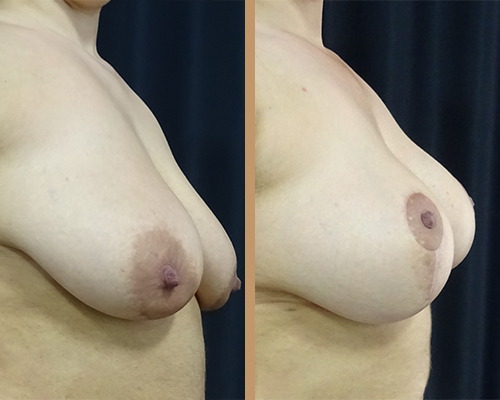
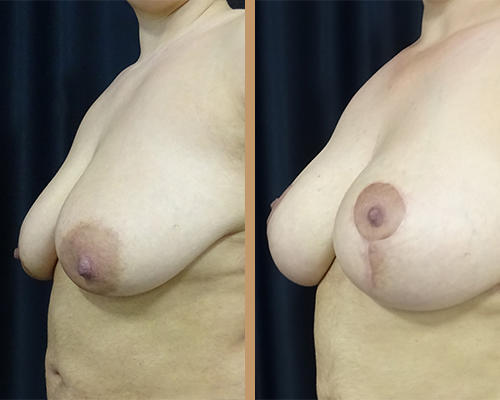
In certain persons, after pregnancy/breastfeeding or after significant weight loss, the position of the breasts in relation to the thorax may change. The nipple may appear below the inframammary groove, and the breast may appear empty.
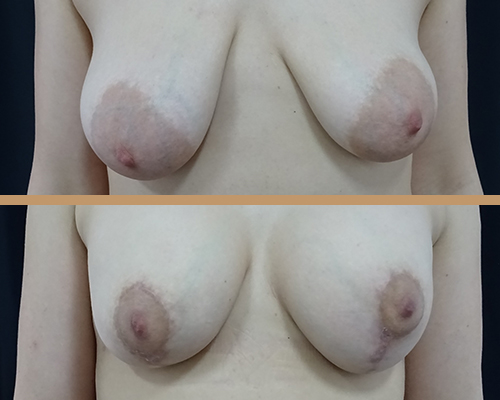
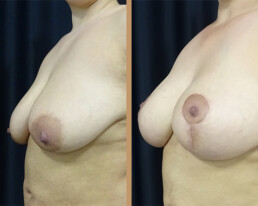
In this situation, the role of the plastic surgeon is essential in repositioning and remodelling the breasts. The intervention aims to correct ptosis and is called mammoplasty or breast lift, being a purely aesthetic intervention. After mammaplasty we expect to obtain a moderately voluminous breast, well positioned in relation to thoracic landmarks.
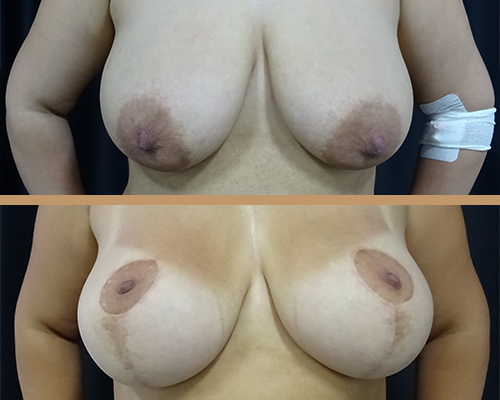
The surgeon will modify the volume of the mammary gland and the skin envelope using a wide range of surgical techniques. Most often, the scar will have the shape of an inverted T, consisting of three parts: a circular part around the areola, a vertical one connecting the areola to the inframammary groove, and a third along the inframammary groove.
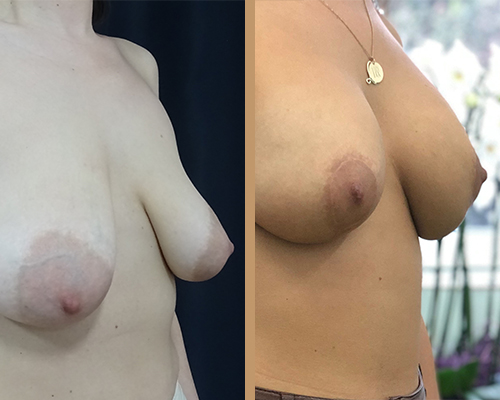
When ptosis is associated with volume loss, both problems can be solved in a single session, in an intervention called augmentation-mastopexy, with a higher degree of difficulty, but after which the patient has a breast with a pleasant shape and adequate volume.
Breast lift can be performed at any age after physiological growth ceases and does not affect the ability to procreate, but may affect the ability to breastfeed. When pregnancy is planned, it should be considered at least 6 months after the intervention.
Examples of our work