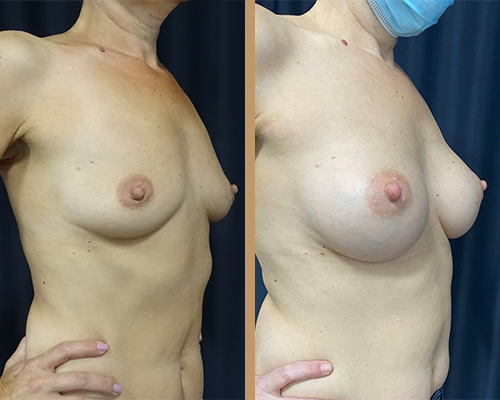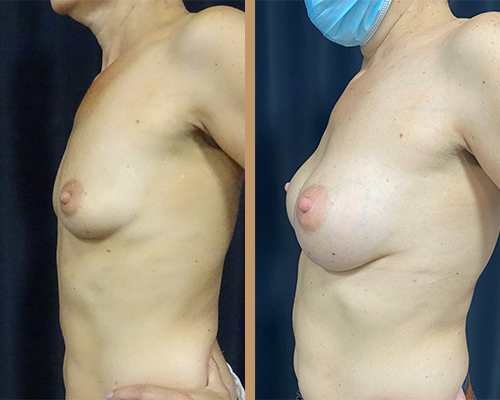
Aumento del seno
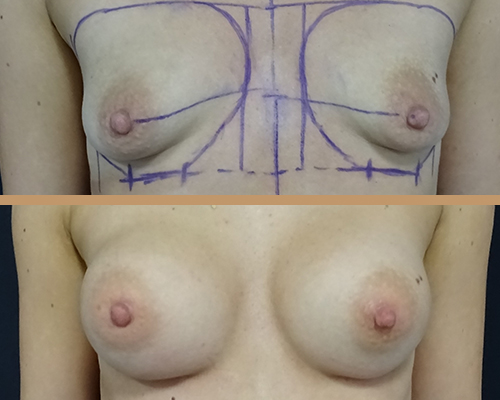
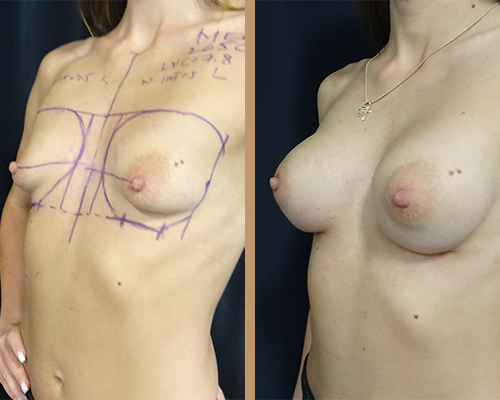
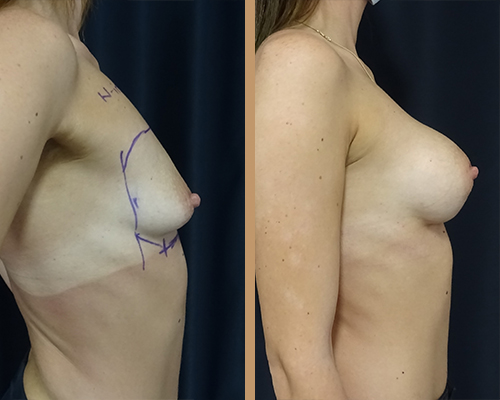
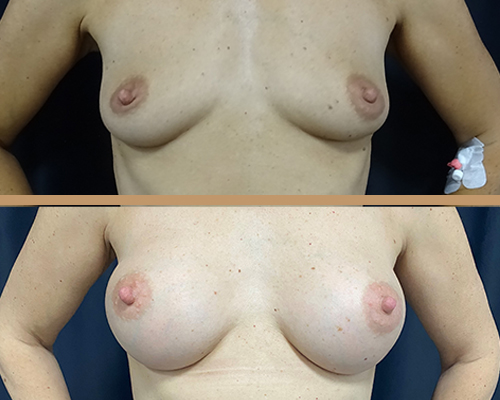
Augmentarea mamară este intervenția chirurgicală de mărire a sânilor cu implanturi din silicon, de formă rotundă sau anatomică. Convalescența durează 2-3 luni, cu purtarea unei bustiere compresive minimum șase săptămâni, iar rezultatul final poate fi apreciat la aproximativ un an. Implanturile nu sunt permanente, durata lor de viață estimată fiind de circa 10 ani.
Implants are medical devices consisting of an outer layer, most often silicone, containing silicone gel. Shapes are varied — round or anatomical, closer to the natural shape of the breasts.
Combinations of shape, texture and size reach impressive numbers. The surgeon must be familiar with their specifications, and the patient will be invited for specialised consultations that simulate final results with different shapes and sizes.
Risks associated with breast augmentation
- Capsular contracture — the capsule is a sheath created by the body to delimit itself from the implanted foreign body. Sometimes the capsule is thin and delicate, but sometimes it is well represented and may contract.
- Implant rupture — occurs rarely, with extremely violent mechanical shocks, or with very old implants. This event requires removal of the prosthesis followed by replacement.
- Capsule calcification — rarely encountered less than 10 years postoperatively.
- Changes in nipple sensitivity.
- Asymmetry — almost universal.
- Interference with oncological monitoring — patients requiring mammograms may experience difficulties and must inform the radiologist about the presence of implants.
Incisions for implant insertion can be placed in various positions, most often in the inframammary groove, axilla or periareolar, and will become permanent scars. The choice of incision placement is made strategically, in agreement with the patient.
Postoperative care after implant augmentation
Rest and avoidance of physical effort are imperative immediately after implant augmentation. The patient will be asked to wear a compressive bra for at least six weeks postoperatively, day and night. Convalescence lasts 2-3 months, and the final result can be appreciated approximately one year after the intervention.
Implants should not be seen as permanent, and patients should anticipate a possible implant change operation in the future. It is not easy to estimate the lifespan of implants, but situations justifying replacement are: appearance of a problem with the implant, change in aesthetic expectations or implant age over 10 years.
Esempi dai nostri lavori